
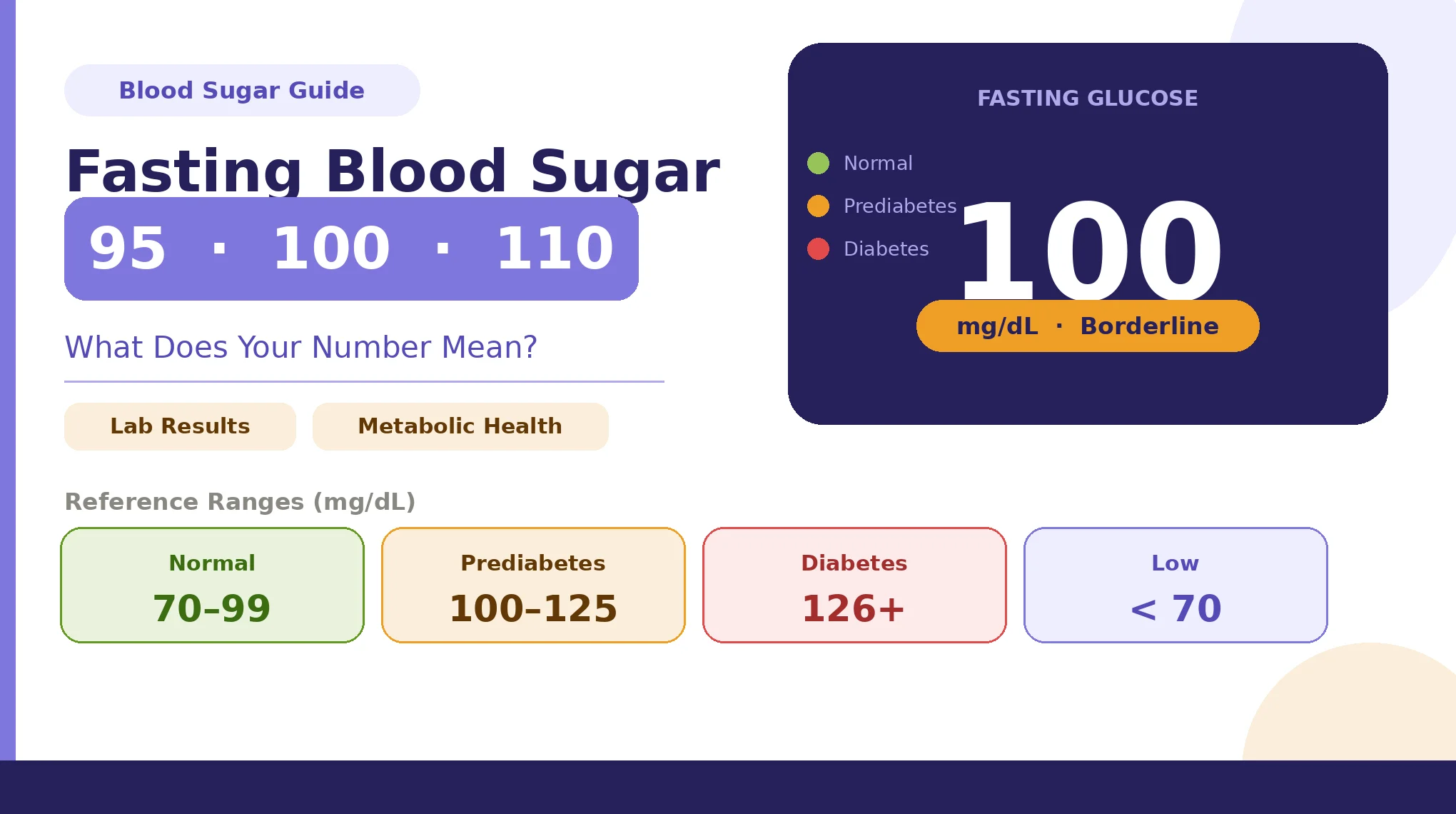
Your Fasting Blood Sugar 95, 100, or 110 result can mean very different things for your health — even though the numbers seem close.
Your doctor said "it's fine" — or maybe they said "watch it." And you're sitting here wondering what the difference between 95 and 110 actually is, and whether that 10-point gap really matters.
It does. And it doesn't have to be confusing.
This blog gives you a straight, honest breakdown of what each number means, what the ranges actually represent, and — most importantly — what you should do based on where your result lands.
1. What Is Fasting Blood Sugar, and Why Does It Matter?
Fasting blood sugar (FBS) — also called fasting plasma glucose (FPG) — measures the amount of glucose in your blood after you haven't eaten for at least 8–10 hours. It's typically done first thing in the morning before breakfast.
Why fasting? Because food directly raises blood sugar. Testing in a fasted state eliminates that variable and gives a clean picture of how well your body regulates glucose on its own — specifically, how effectively your pancreas produces insulin and how well your cells respond to it.

Why This Test Is So Important
Glucose regulation is the foundation of metabolic health. When it starts to slip — even slightly — the effects compound over years before symptoms appear. The World Health Organization estimates that 422 million people worldwide have diabetes, and a significant portion were in the "borderline" range for years before diagnosis.
Fasting blood sugar is one of the earliest, most reliable signals that regulation is beginning to falter — often 5–10 years before a diabetes diagnosis.
2. What Every Number Means
The Standard Reference Ranges (Adults)
| Fasting Blood Sugar | Classification | What It Means |
| Below 70 mg/dL | Low (Hypoglycemia) | Too low — can cause dizziness, shakiness |
| 70–99 mg/dL | Normal | Healthy glucose regulation |
| 100–125 mg/dL | Prediabetes (Impaired Fasting Glucose) | Elevated — action recommended |
| 126 mg/dL and above | Diabetes | Requires medical diagnosis and management |
Unit conversion: If your report shows mmol/L (used in India, UK, Canada, Australia):
- Normal: 3.9–5.5 mmol/L
- Prediabetes: 5.6–6.9 mmol/L
- Diabetes: 7.0 mmol/L and above Multiply mmol/L × 18 to convert to mg/dL.
Now Let's Talk About Your Specific Number
Fasting Blood Sugar of 95 mg/dL
You're in the normal range. 95 is healthy — it means your body is managing glucose effectively. No action required beyond maintaining your current lifestyle.
However, if 95 is trending upward from previous tests (say, you were at 82 last year and 95 this year), that trajectory is worth noting. A single number is a snapshot. A trend is the real story.
Fasting Blood Sugar of 100 mg/dL
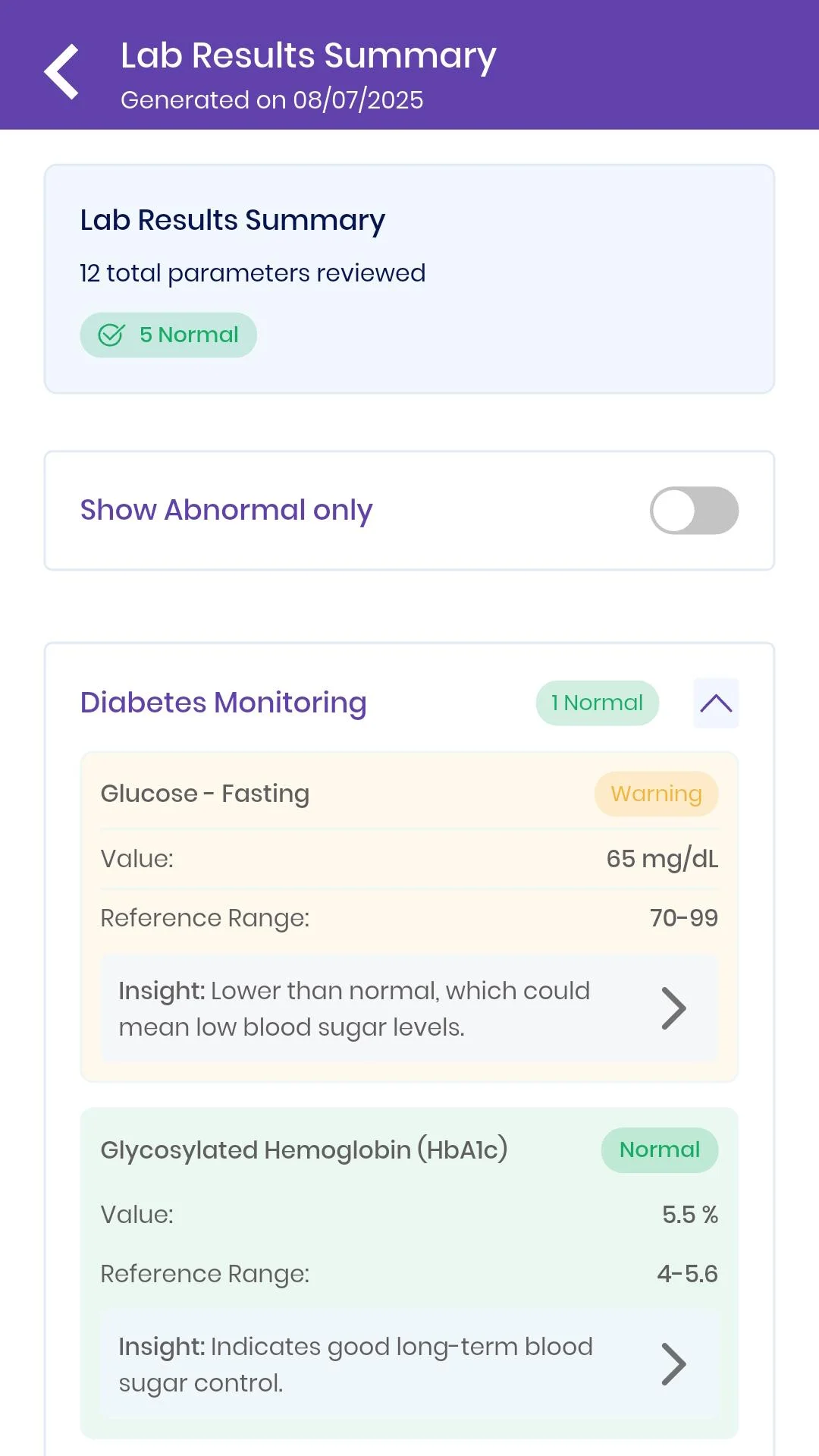
100 is the exact threshold where "normal" ends and "impaired fasting glucose" begins, per ADA guidelines. At 100, you are technically in the prediabetes range — though many doctors treat 100–105 as a watch zone rather than cause for alarm.
What 100 means practically:
- Your insulin sensitivity may be slightly declining
- Your pancreas is working harder than ideal to keep glucose in range
- Lifestyle intervention now is highly effective — studies show it can prevent progression to diabetes in 58% of cases (CDC Diabetes Prevention Program data)
This is not a crisis. It is a clear, early signal.
Fasting Blood Sugar of 110 mg/dL
110 is solidly in the prediabetes range. At this level, the risk of progressing to Type 2 diabetes without intervention is real — approximately 25–30% of people with fasting glucose between 110–125 mg/dL develop diabetes within 5 years if no changes are made.
110 also means:
- Insulin resistance is likely present
- Abdominal fat, inactivity, poor diet, or sleep issues may be contributing
- A second confirmatory test (and possibly an HbA1c) is recommended
- Lifestyle changes at this stage produce the strongest, most reliable results
Fasting Blood Sugar of 126 mg/dL or Above
A single reading of 126+ meets the ADA's diagnostic threshold for diabetes — but diagnosis requires two separate tests on different days showing 126 or above, or a confirming HbA1c of 6.5% or higher. One high result alone is not a diagnosis, but it must be followed up promptly.
The HbA1c Context
Your fasting glucose is a single-day measurement. HbA1c (glycated hemoglobin) gives the average blood sugar over the past 2–3 months — it's the bigger picture test.
| HbA1c | Classification |
| Below 5.7% | Normal |
| 5.7–6.4% | Prediabetes |
| 6.5% and above | Diabetes |
If your fasting glucose is 100–125 mg/dL, ask your doctor for an HbA1c alongside it. The two together tell a much fuller story than either alone.
3. Should You Be Worried?
Here's a clear, honest framework:
If your number is 70–99: Maintain your lifestyle. Retest annually. No immediate concern.
If your number is 100–109: This is your early warning window. No medication typically needed, but lifestyle intervention is highly effective and the science strongly supports acting now. Retest in 3–6 months.
If your number is 110–125: Prediabetes is confirmed. Speak to your doctor. Get an HbA1c. Start structured lifestyle changes. Consider a referral to a diabetes prevention program. Retest in 3 months.
If your number is 126+: Get a confirmatory test. Do not self-diagnose, but do not delay either. This needs medical evaluation.
Risk Factors That Make Any Elevated Number More Serious
- Family history of Type 2 diabetes — first-degree relative doubles your risk
- Overweight or obese — especially abdominal obesity (waist above 35 inches/women, 40 inches/men)
- Physically inactive — sedentary lifestyle is one of the strongest modifiable risk factors
- Age above 45 — insulin sensitivity naturally declines with age
- History of gestational diabetes — raises lifetime Type 2 diabetes risk by 7× compared to the general population
- PCOS — polycystic ovary syndrome is strongly linked to insulin resistance
- High blood pressure or abnormal cholesterol — metabolic syndrome cluster
4. What You Can Do Starting This Week
Cut Refined Carbs & Sugar
Reduce white bread, sugary drinks, and packaged snacks. Choose whole grains, legumes, and vegetables instead.
Walk After Meals
A 10–15 minute walk after eating helps lower post-meal blood sugar spikes naturally.
Lose Belly Fat
Even losing 5–7% of body weight can significantly improve insulin sensitivity and blood sugar control.
Do Strength Training
Resistance exercises 2–3 times weekly help muscles use glucose more efficiently.
Improve Sleep
Poor sleep can raise fasting blood sugar. Aim for 7–8 hours consistently.
Manage Stress
Chronic stress raises cortisol, which can increase blood sugar levels over time.
What These Numbers Look Like in Practice
Vikram, 41, IT manager, Hyderabad Fasting glucose: 107 mg/dL. No symptoms. Desk job, eats dinner late, sleeps 5–6 hours, no regular exercise. His doctor called it "borderline" and suggested a retest in a year.
Vikram didn't wait. He started a 20-minute post-dinner walk, cut his evening rice portion by half, and started sleeping by 11 PM. At his 4-month retest: fasting glucose was 91 mg/dL. No medication, no dramatic diet overhaul.
Meena, 48, with family history of diabetes Fasting glucose: 118 mg/dL. HbA1c: 6.1%. Both in prediabetes range. Her mother developed Type 2 diabetes at 52. Her doctor enrolled her in a structured diabetes prevention program alongside dietary changes. After 6 months: fasting glucose 103 mg/dL, HbA1c 5.8% — still borderline, but clearly trending in the right direction.
5. Track the Trend, Not Just the Test
Fasting blood sugar can fluctuate based on stress, sleep, illness, and diet in the days before a test. A single reading doesn't define your metabolic health — the trend across multiple readings does.
Tracking Section
| What to Track | Target | Frequency |
| Fasting blood sugar | Below 100 mg/dL | Every 3–6 months if borderline |
| HbA1c | Below 5.7% | Every 6 months if prediabetic |
| Waist circumference | Decreasing trend | Monthly |
| Body weight | 5–7% reduction if overweight | Monthly |
| Post-meal glucose (2hr) | Below 140 mg/dL | Periodically if monitoring |
Medheed lets you log your blood reports over time and visualise these markers as trends — so you can see whether your fasting glucose is rising, falling, or stable across multiple tests. When you're managing borderline readings, seeing a chart that shows 118 → 107 → 94 over six months is the kind of feedback that keeps you motivated and informs your next doctor's conversation.
When to See a Doctor
See your doctor if:
- Your fasting glucose is 100 mg/dL or above on any test
- You have a reading of 126 mg/dL or above (needs confirmatory testing)
- Your fasting glucose is rising test-to-test even within the normal range
- You have two or more risk factors (family history, obesity, inactivity, PCOS, age 45+)
- You haven't had fasting glucose tested in the past year and have any risk factors
The ADA recommends screening for all adults from age 35 and for anyone with risk factors regardless of age.
FAQ
Q: My fasting sugar was 100 once — am I diabetic? No. A single reading of 100 mg/dL is at the threshold of prediabetes, not diabetes. Diagnosis of prediabetes typically requires the same reading on two separate occasions, or confirmation via HbA1c. One test is a flag, not a diagnosis.
Q: Can stress cause a falsely high fasting blood sugar? Yes. Physical or emotional stress raises cortisol, which raises glucose. If you were ill, sleep-deprived, or under significant stress before your test, a repeat in a calmer state is reasonable to request.
Q: Is fasting glucose of 95 too high? No — 95 is comfortably within the normal range (70–99 mg/dL). However, if it's trending upward year over year, that trajectory is worth monitoring.
Q: Can fasting blood sugar go back to normal from prediabetes? Yes — and this is one of the most evidence-backed facts in metabolic medicine. The DPP trial showed that intensive lifestyle intervention reverses prediabetes to normal glucose in a significant proportion of participants. The window of 100–125 mg/dL is genuinely reversible with consistent effort.
Q: Does the time of day affect fasting blood sugar? Slightly. The dawn phenomenon — a natural early morning cortisol surge — can raise fasting glucose by 5–10 mg/dL if you test very early (5–6 AM) versus later in the morning. Most labs draw at consistent times to control for this.
Conclusion
Here's the simple version of everything above:
- 70–99 mg/dL: Normal. Maintain your habits and retest annually.
- 100–109 mg/dL: Early warning. Lifestyle changes now are highly effective.
- 110–125 mg/dL: Prediabetes. Act with intention — this is reversible.
- 126+ mg/dL: Get a confirmatory test and speak to your doctor.
Your fasting blood sugar number isn't a fixed verdict. It's a metabolic report card that changes in response to how you eat, move, sleep, and manage stress. The difference between 110 and 90 is often six months of consistent, targeted effort — not a lifetime of medication.
Track your trend. Understand your number. Act early.
References
- American Diabetes Association. (2023). Standards of Medical Care in Diabetes — Classification and Diagnosis. Diabetes Care, 46(Suppl 1).
- Knowler, W.C. et al. (2002). Reduction in the incidence of Type 2 diabetes with lifestyle intervention or metformin (DPP Trial). New England Journal of Medicine, 346, 393–403.
- Sato, J. et al. (2018). Low carbohydrate diet and fasting plasma glucose in prediabetes. Nutrition & Diabetes, 8(1), 23.
- DiPietro, L. et al. (2013). Three 15-min bouts of moderate postmeal walking significantly improves 24-h glycemic control. Diabetes Care, 36(10), 3262–3268.
- Spiegel, K. et al. (2005). Sleep curtailment in healthy young men is associated with decreased leptin levels, elevated ghrelin levels and increased hunger and appetite. Annals of Internal Medicine.