
A Number on a Report That Nobody Explains
Sneha, 33, got her blood test back. Vitamin D: 14 ng/mL. The lab flagged it as low. Her doctor said "take a supplement." No explanation of what 14 actually means, why it matters, or what happens if she ignores it.
Sound familiar?
Vitamin D is one of the most commonly tested and most commonly misunderstood numbers in a routine health report. Most people know low is bad. Very few know what their specific number is actually telling them about their body right now.
Let's fix that.
What Is Vitamin D and Why Does Your Body Need It?
Vitamin D is not just a vitamin — it behaves more like a hormone. Almost every cell in your body has a receptor for it. It regulates calcium absorption, supports your immune system, influences your mood, and plays a direct role in muscle and bone health.

Your body makes it when sunlight hits your skin. You also get small amounts from food - fatty fish, egg yolks, fortified milk. But in reality, most people especially those living in cities, working indoors, or covering their skin are - not getting enough from either source.
What Do the Numbers Actually Mean?
Vitamin D is measured in ng/mL (nanograms per millilitre) or nmol/L. Most Indian labs report in ng/mL. Here is what each range means in plain language:
Below 12 ng/mL — Deficient
This is critically low. At this level, your body cannot absorb calcium properly, bone density starts dropping, and your immune system is significantly weakened. Fatigue, muscle weakness, and bone pain at this level are not in your head — they are physiological.
12–20 ng/mL — Insufficient
Your body has some Vitamin D but not enough for optimal function. You may not feel dramatically unwell, but your energy, immunity, and mood are quietly paying the price. This is where most urban Indians land on testing.
20–30 ng/mL — Borderline
Technically "low normal" by some lab standards, but many endocrinologists and researchers consider this still suboptimal especially for people with existing health conditions, bone concerns, or fatigue symptoms.
30–60 ng/mL — Optimal
This is the sweet spot. Your body can absorb calcium efficiently, your immune function is supported, and your muscles and mood are getting what they need.
Above 100 ng/mL — Toxicity Risk
Too much Vitamin D, almost always from over-supplementation, not sunlight - can cause nausea, kidney stress, and dangerous calcium buildup. More is not always better.
What Does Low Vitamin D Actually Feel Like?
This is where it gets personal. Low vitamin D deficiency symptoms don't announce themselves loudly. They creep in slowly and get blamed on other things:
- Constant fatigue - even after a full night's sleep
- Bone or back pain - especially in the lower back, knees, or hips
- Getting sick often - Vitamin D is central to your immune defence
- Low mood or mild depression - Vitamin D influences serotonin production
- Hair thinning - often overlooked as a Vitamin D deficiency symptom
- Muscle weakness - especially noticeable when climbing stairs or exercising
The tricky part? All of these symptoms overlap with stress, poor sleep, and iron deficiency. Without a blood test, Vitamin D is the last thing most people think to check.
Who Is Most at Risk?
- People who spend most of their day indoors
- Women — especially post-menopausal, pregnant, or breastfeeding
- People with darker skin tones (melanin reduces Vitamin D synthesis from sunlight)
- Those living in northern cities or areas with limited winter sun
- People over 50 — skin produces less Vitamin D with age
- Anyone with gut conditions like IBS or celiac disease — absorption is reduced
Real Talk: Why "Just Go Out in the Sun" Isn't Enough
Rohan, 38, works from home in Delhi. He goes for a morning walk every day. His Vitamin D came back at 16 ng/mL.
Here's why sunlight alone often fails: you need direct midday sun on a significant portion of your skin for at least 20–30 minutes — without sunscreen. For most working adults, that simply doesn't happen consistently enough to maintain optimal levels.
Food sources help but are limited. Fatty fish like salmon provides around 400–600 IU per serving, but the recommended daily intake for deficient adults is often 1500–2000 IU or more. Diet alone rarely closes the gap.
How Is It Treated?
Treatment depends entirely on your number:
Below 12 ng/mL: High-dose supplementation — typically 60,000 IU weekly for 8–12 weeks, followed by a maintenance dose. Always under medical supervision.
12–20 ng/mL: Moderate supplementation — often 2000–4000 IU daily, alongside dietary and lifestyle changes.
20–30 ng/mL: Maintenance supplementation of 1000–2000 IU daily is usually recommended, especially in winter months or for high-risk groups.
Important: Always retest after 3 months of supplementation. Your target isn't just "not deficient" — it's optimal, which means 40–60 ng/mL for most adults.
FAQs
Q: Can I take Vitamin D without testing first?
A low-dose supplement of 1000 IU daily is generally considered safe. But if you're considering higher doses, test first. Excess Vitamin D above 100 ng/mL is toxic and not reversible quickly.
Q: Should I take Vitamin D with anything?
Yes — always take it with a meal that has some fat, as Vitamin D is fat-soluble. Vitamin K2 is often recommended alongside it to direct calcium to bones rather than arteries.
Q: How long does it take to improve levels?
With consistent supplementation, most people see meaningful improvement in 8–12 weeks. A retest at 3 months confirms whether the dose is working.
Q: Is low Vitamin D linked to depression?
Research suggests a significant association. Vitamin D influences serotonin synthesis, and low levels are consistently found in people with depression and seasonal mood disorders — though causality is still being studied.
How Medheed Can Help
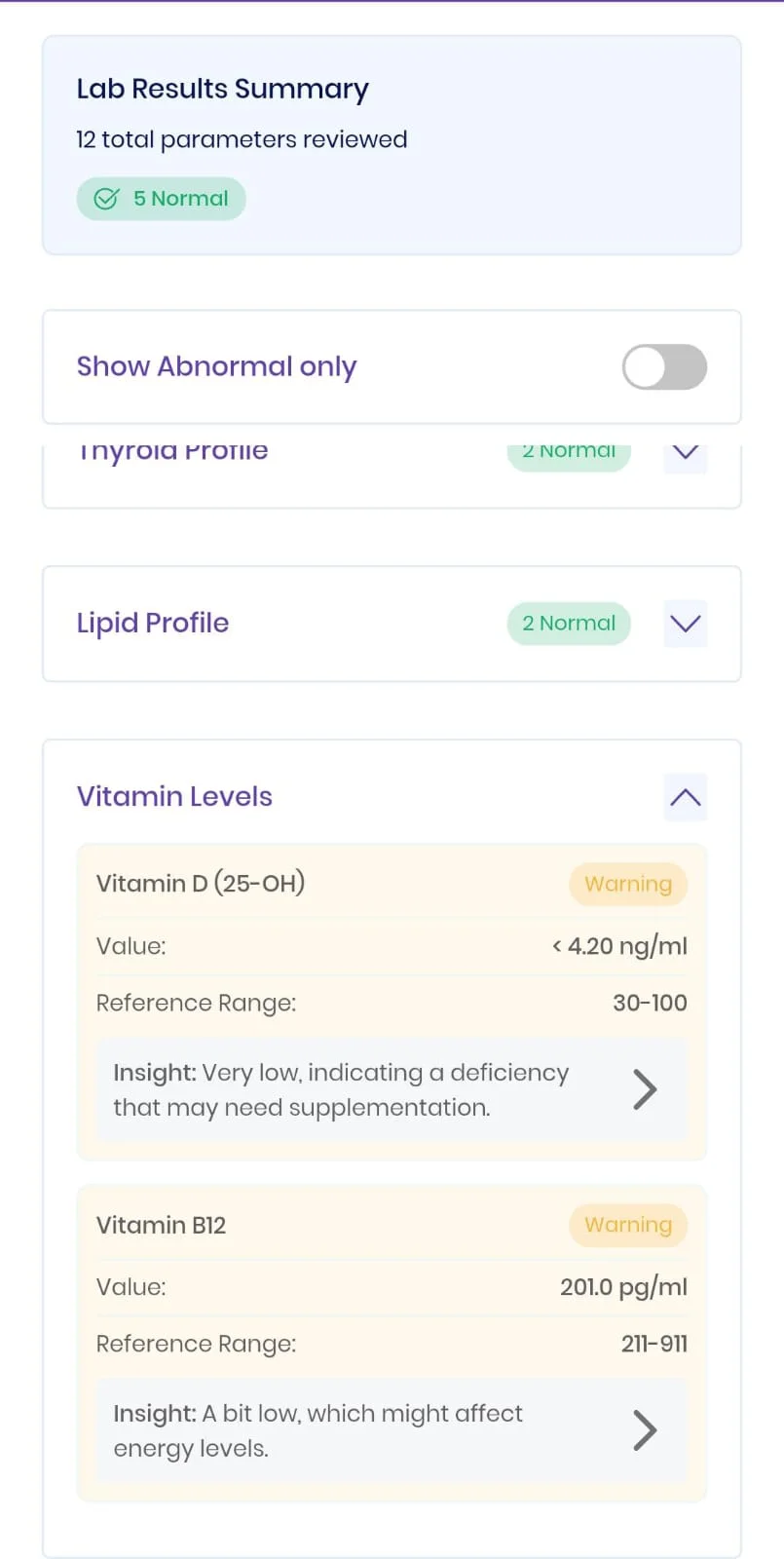
Your lab report says 14 ng/mL. But what does that mean for your energy, your bones, your immunity — and what should you actually do next?
Medheed translates your Vitamin D result — and every other number on your report — into plain language with clear context. So you leave your report understanding your body, not just a flagged number on a page.
The Bottom Line
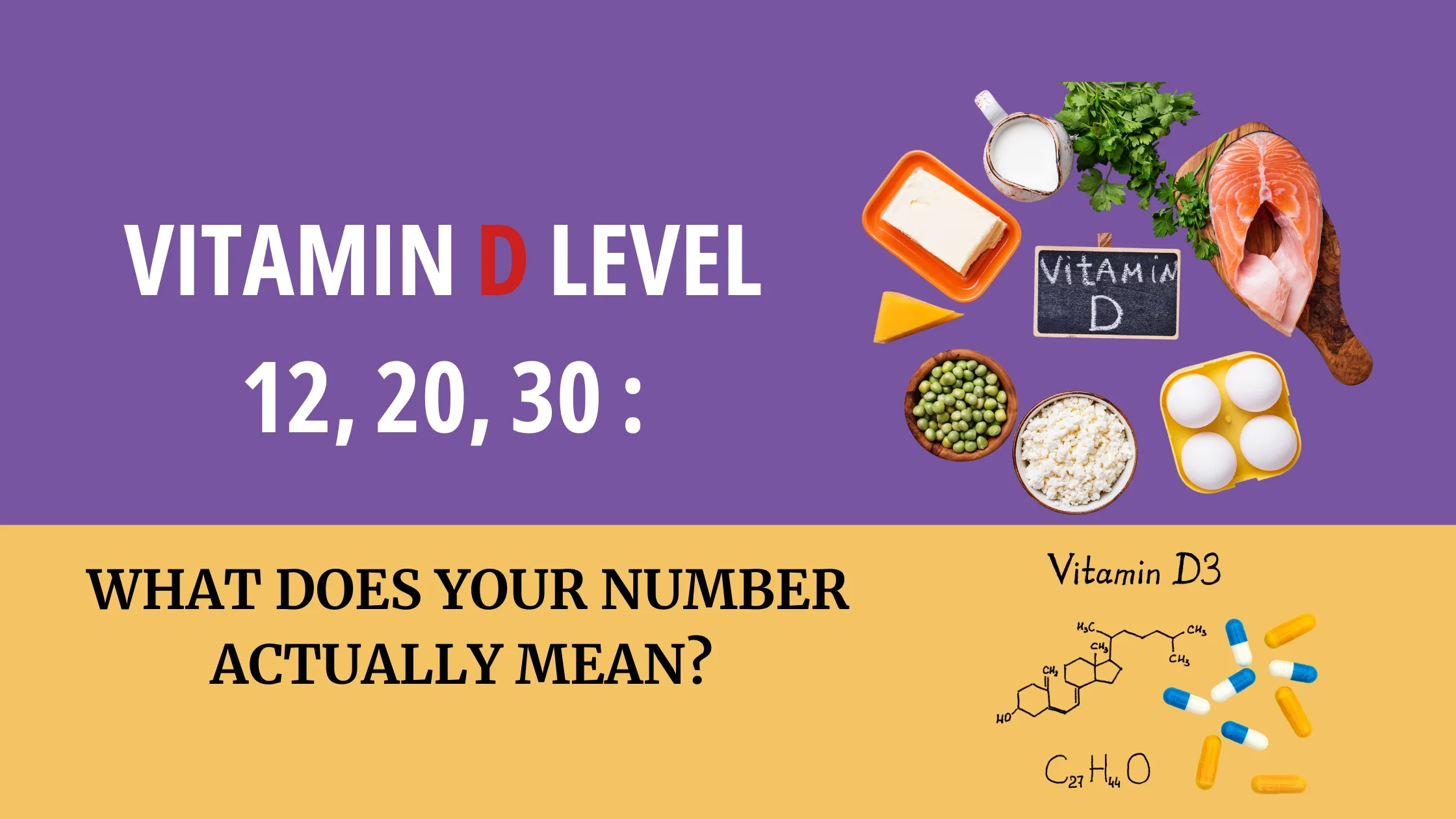
A Vitamin D level of 12 is not the same as 20. And 20 is not the same as 30. Each number sits in a different zone — with different implications for how your body is functioning right now.
If your report came back low, don't ignore it and don't panic. Understand where you are, what it means, and what it takes to get to optimal. Vitamin D deficiency is one of the most fixable health problems out there — once you know your number.
References
- Holick, M. F. (2007). Vitamin D deficiency. New England Journal of Medicine, 357(3), 266–281. https://doi.org/10.1056/NEJMra070553
- Bikle, D. D. (2014). Vitamin D metabolism, mechanism of action, and clinical applications. Chemistry & Biology, 21(3), 319–329.
- Lips, P. (2006). Vitamin D physiology. Progress in Biophysics and Molecular Biology, 92(1), 4–8.
- Tripkovic, L., et al. (2012). Comparison of vitamin D2 and vitamin D3 supplementation. American Journal of Clinical Nutrition, 95(6), 1357–1364.
- Endocrine Society Clinical Practice Guideline. (2011). Evaluation, treatment, and prevention of Vitamin D deficiency. Journal of Clinical Endocrinology & Metabolism, 96(7), 1911–1930.
- Indian Council of Medical Research (ICMR). Recommended Dietary Allowances. https://www.icmr.nic.in