
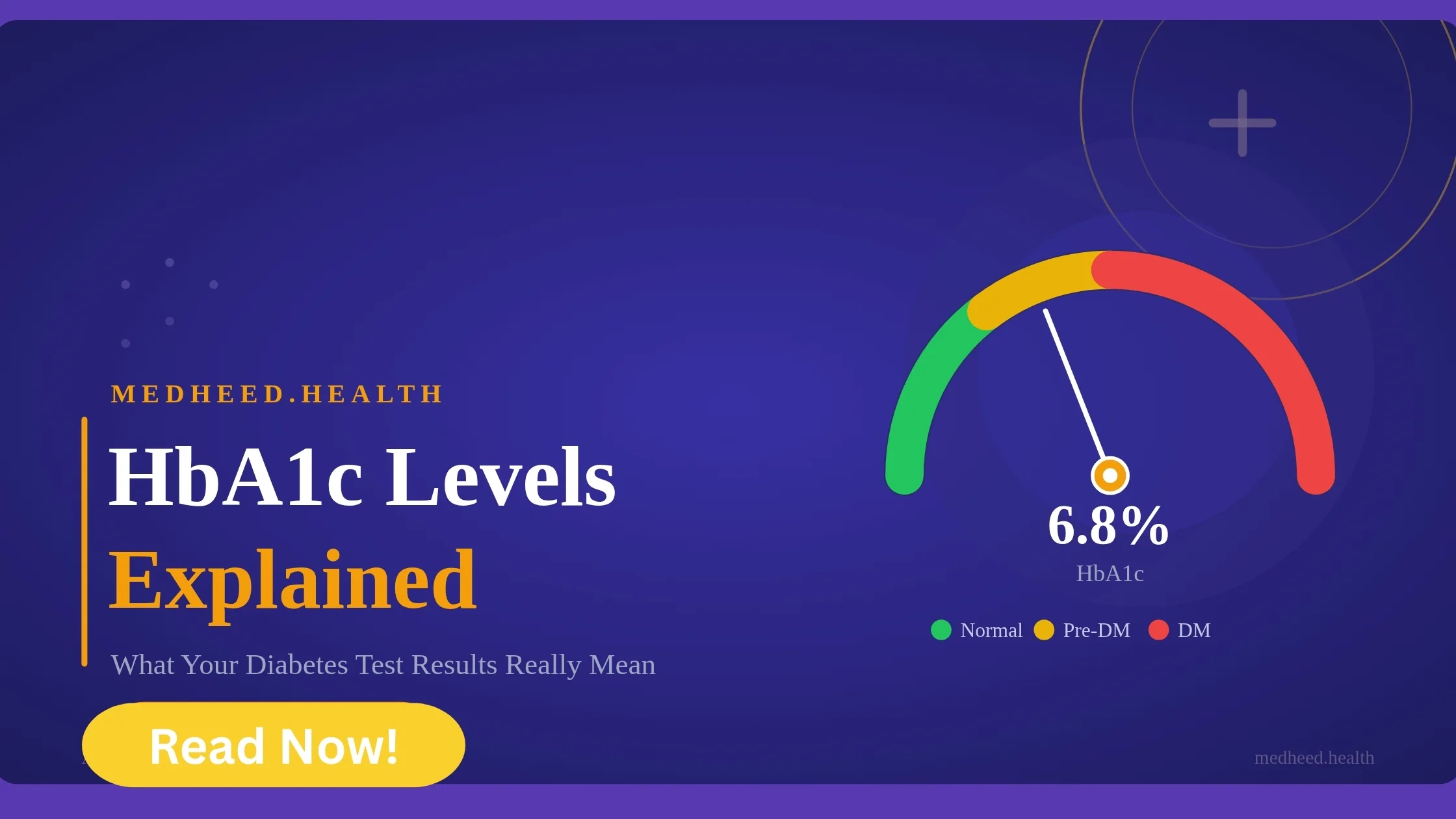
Understanding a lab report can feel overwhelming, especially when you see numbers, percentages, and medical terms that are difficult to interpret. One of the most important tests in a diabetes report is the HbA1c test, which helps doctors understand your average blood sugar levels over time.
In this article, we will break down HbA1c levels explained in simple terms, along with other important diabetes biomarkers. By the end of this article, you will be able to understand your diabetes lab report even if you don’t have a medical background.
This is exactly the problem Medheed’s AI lab report explainer solves — helping you interpret medical reports and understand what your results actually mean for your health.
What is the HbA1c Test?
The HbA1c test (Glycated Hemoglobin test) measures the average blood sugar levels in your body over the past 2–3 months.
When glucose (sugar) circulates in your blood, it attaches to hemoglobin — a protein in red blood cells. The HbA1c test measures the percentage of hemoglobin that has sugar attached to it.
Because red blood cells live for around 120 days, the HbA1c test gives a long-term picture of blood sugar control rather than a single moment measurement.
Doctors use this test to:
- Diagnose diabetes
- Monitor diabetes control
- Evaluate risk for prediabetes
HbA1c Normal Range
Understanding your HbA1c percentage is essential for knowing whether your blood sugar levels are healthy.
| HbA1c Level | Meaning |
| Below 5.7% | Normal blood sugar |
| 5.7% – 6.4% | Prediabetes |
| 6.5% or higher | Diabetes |
For people already diagnosed with diabetes, doctors usually recommend keeping HbA1c below 7% to reduce the risk of complications.

Why HbA1c is Important in Diabetes
Unlike daily glucose tests, HbA1c gives a long-term view of blood sugar levels.
Patients don’t think in percentages—so here’s a practical way to understand it:
- HbA1c 5.7% → ~117 mg/dL average sugar
- HbA1c 6.5% → ~140 mg/dL
- HbA1c 7% → ~154 mg/dL
- HbA1c 8% → ~180 mg/dL
Example:
If your HbA1c is 8%, it means your blood sugar has been consistently high—not just on one bad day.
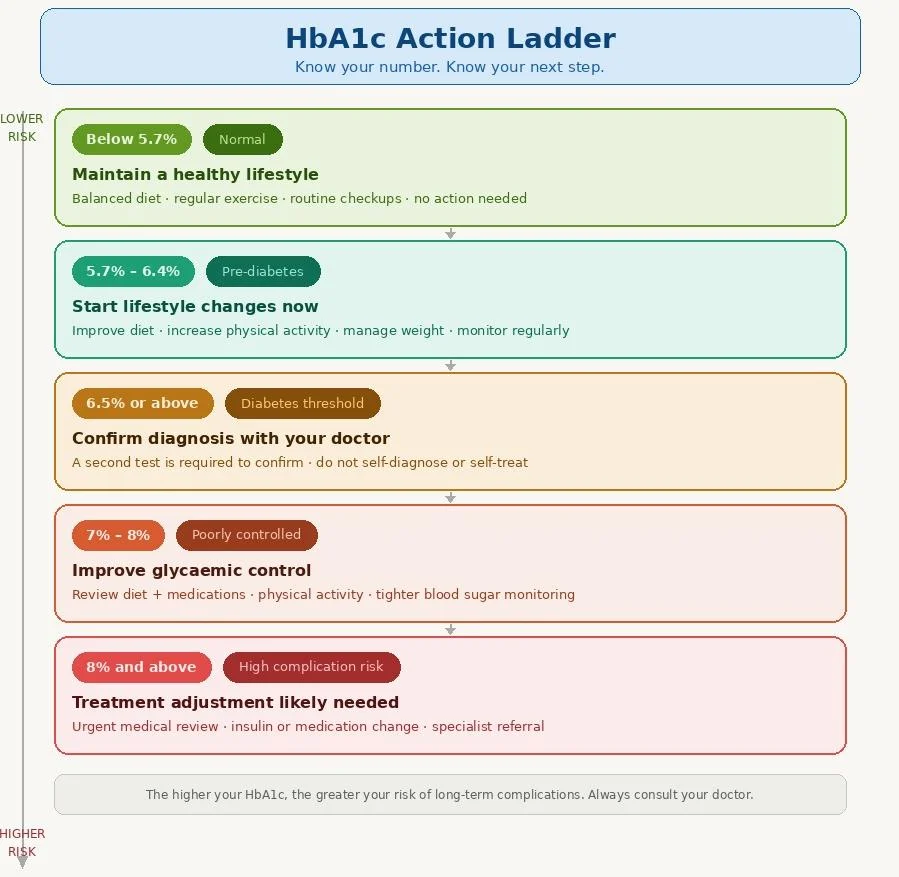
If HbA1c remains high for a long period, it can increase the risk of:
- Heart disease
- Kidney damage
- Nerve damage
- Eye problems
This is why doctors recommend checking HbA1c every 3–6 months for diabetes patients.
Other Important Diabetes Biomarkers in Your Lab Report
While the HbA1c test is crucial, doctors also evaluate
several other biomarkers to understand diabetes and its effects on the body.
Below are the most common biomarkers you may see in a diabetes lab report.
1. Fasting Blood Glucose
This test measures blood sugar after 8–12 hours of fasting.
| Result | Meaning |
| 70–99 mg/dL | Normal |
| 100–125 mg/dL | Prediabetes |
| 126 mg/dL or higher | Diabetes |

2. Postprandial Blood Sugar (PP)
This test measures blood sugar two hours after eating a meal.
Normal value:
Below 140 mg/dL
High post-meal sugar may indicate:
- Poor glucose control
- Insulin resistance
3. Fasting Insulin
Insulin is the hormone responsible for controlling blood sugar levels.
If insulin levels are high, it may indicate insulin resistance, which often develops before type 2 diabetes.
4. C-Peptide Test
C-peptide shows how much insulin the pancreas is producing.
Doctors use this test to:
- Distinguish between Type 1 and Type 2 diabetes
- Evaluate insulin production
Low levels may indicate reduced insulin production.
5. Creatinine and eGFR
These biomarkers evaluate kidney function, which is especially important for diabetes patients.
High blood sugar can damage kidneys over time.
| Biomarker | What it Shows |
| Creatinine | Waste product filtered by kidneys |
| eGFR | Kidney filtration efficiency |
Healthy kidneys usually have an eGFR above 90.
6. Lipid Profile (Cholesterol Tests)
Diabetes can increase the risk of heart disease, so doctors often check cholesterol levels.
Important markers include:
- LDL cholesterol (bad cholesterol)
- HDL cholesterol (good cholesterol)
- Triglycerides
- Total cholesterol
High triglycerides and LDL levels may increase the risk of cardiovascular disease.
Example Diabetes Lab Report
Below is a simplified example of what a diabetes lab report may look like.
| Test | Result | Normal Range | Interpretation |
| HbA1c | 6.8% | Below 5.7% | High – Diabetes |
| Fasting Glucose | 118 mg/dL | 70–99 | Elevated |
| Postprandial Glucose | 175 mg/dL | <140 | High |
| Insulin | 17 µIU/mL | 2–15 | Slightly high |
| Creatinine | 1.0 mg/dL | 0.7–1.3 | Normal |
| eGFR | 92 | >90 | Normal |
| Triglycerides | 185 mg/dL | <150 | High |
Real-Life Patient Scenarios
Scenario 1: If your HbA1c increases from 6.2% to 7.1%, it signals worsening sugar control—even if you feel fine.
Scenario 2: HbA1c of 8% with high triglycerides = higher risk of heart disease.
Scenario 3: Normal HbA1c but high fasting insulin = early insulin resistance.
When Should You Seek Medical Help?
Seek medical advice if you notice:
- Frequent urination
- Excessive thirst
- Unexplained weight loss
- Blurred vision
- Fatigue
How Medheed Helps You
Instead of guessing what your report means, Medheed’s AI lab report explainer:
- Simplifies medical terms
- Gives clear interpretation
- Highlights risks
- Suggests next steps
Because your health report should be easy to understand—not confusing.
Interpretation
This report suggests that the patient has elevated HbA1c and blood glucose levels, indicating poor blood sugar control. The insulin level is slightly elevated, which may suggest insulin resistance. Kidney function markers remain normal, but triglycerides are high, increasing cardiovascular risk.
Monitoring these biomarkers regularly can help manage diabetes effectively.
References
- American Diabetes Association (ADA). Standards of Medical Care in Diabetes. Available at: https://diabetes.org
- World Health Organization (WHO). Diabetes – Key Facts. Available at: https://www.who.int/news-room/fact-sheets/detail/diabetes
- National Institute of Diabetes and Digestive and Kidney Diseases (NIDDK). Diabetes Tests & Diagnosis. Available at: https://www.niddk.nih.gov
- Mayo Clinic. Diabetes Diagnosis and Treatment. Available at: https://www.mayoclinic.org
- National Kidney Foundation. eGFR and Kidney Function. Available at: https://www.kidney.org