
Your Cholesterol Report Says “Normal”… But Is It Really?
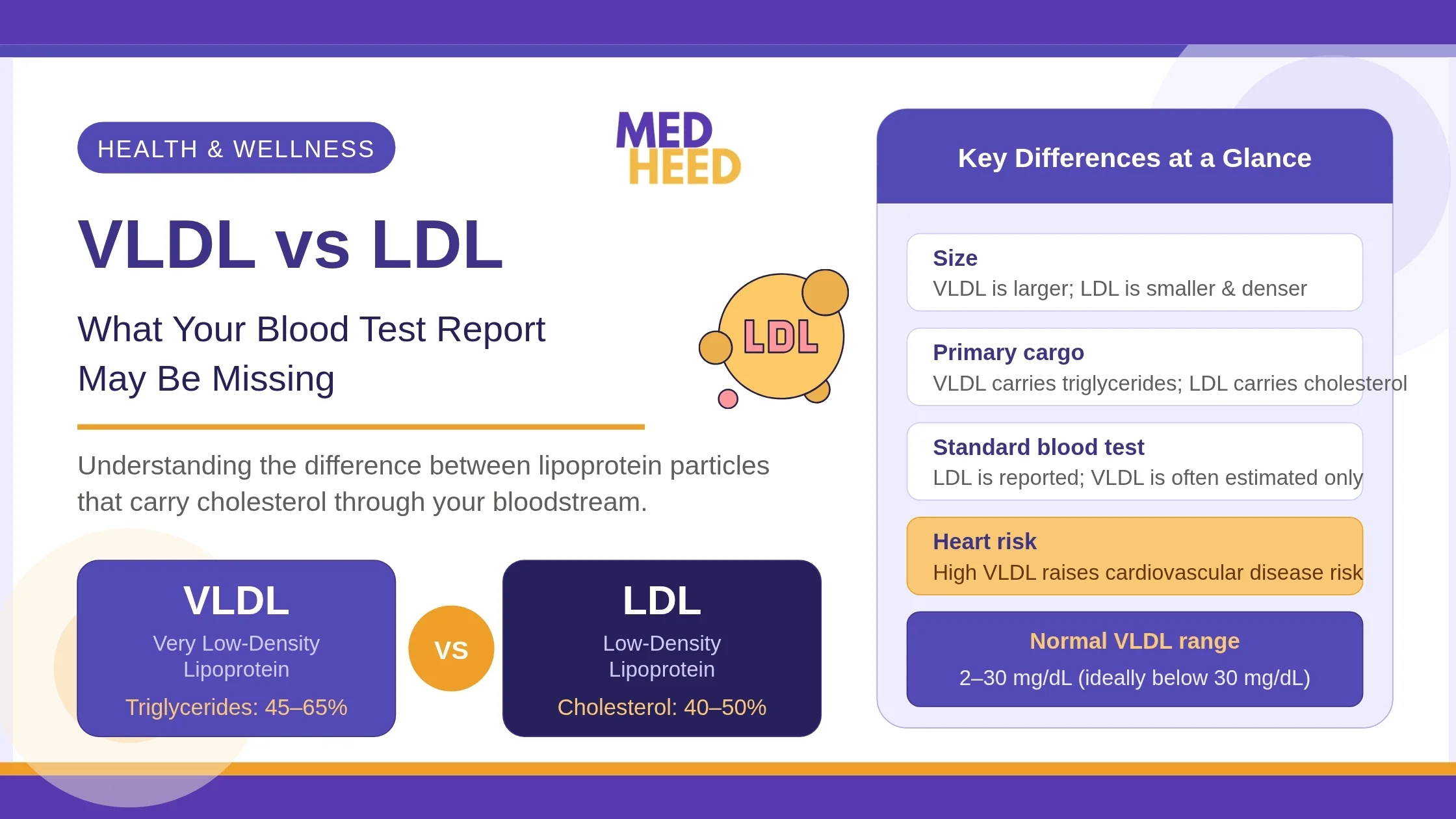
VLDL vs LDL: What Your Blood Test Report May Be Missing is more than just a cholesterol comparison — it’s about understanding hidden heart risk that many people overlook. Most people open their lipid profile, look at LDL cholesterol, and stop there.
If LDL is slightly high, they panic. If it looks normal, they move on.
But one important number often gets ignored completely: VLDL. And sometimes, that’s the number quietly increasing your long-term heart risk.
A blood test is not just about “high” or “low.” It’s about understanding what your body may be trying to tell you before symptoms appear.
The Cholesterol Number Most People Ignore
What is LDL?
LDL (Low-Density Lipoprotein) is commonly called “bad cholesterol.”
High LDL levels can slowly build plaque inside arteries, increasing the risk of:
- Heart disease
- Stroke
- Blocked arteries
What is VLDL?
VLDL (Very Low-Density Lipoprotein) mainly carries triglycerides in your blood. High VLDL is often linked with:
- Poor diet habits
- Excess sugar intake
- Obesity
- Diabetes risk
The Important Difference
LDL is more connected to cholesterol buildup.
VLDL is often a sign of metabolic imbalance happening underneath.
That’s why checking only LDL may not give the full picture.

What Your Report May Actually Be Telling You
| Condition | What Your Report May Be Telling You | Common Causes | What You Should Do Next |
| If LDL is High | Your arteries may gradually start storing cholesterol deposits over time. | • High saturated fat intake• Smoking• Genetics• Lack of exercise | • Reduce processed and fried foods• Increase physical activity• Recheck lipid profile regularly• Track changes instead of relying on one report |
| If VLDL is High | This usually points toward rising triglycerides and unhealthy metabolic patterns. | • Excess sugar consumption• Alcohol intake• Poor sleep• Weight gain• Insulin resistance | • Cut sugary drinks and refined carbs• Improve sleep quality• Focus on weight management• Monitor triglycerides alongside VLDL |
If Both LDL and VLDL are High
This is where risk becomes more concerning. It may indicate:
- Increased cardiovascular risk
- Poor metabolic health
- Higher inflammation risk
- Long-term lifestyle imbalance
This is the stage where tracking matters most. One test alone cannot show trends. Your body changes slowly — and your reports usually show signs before symptoms appear.
Simple Daily Habits That Quietly Increase LDL & VLDL
Habits many people ignore:
- Frequent fast food
- Sugary tea/coffee multiple times daily
- Late-night eating
- Poor sleep schedule
- Sitting for long hours
- Stress without recovery
- Smoking
- Lack of exercise
These habits may not show immediate symptoms, but they often reflect inside blood reports first.
Visual Risk Summary
| Biomarker | Range / Status | Risk Category | What It May Indicate |
| LDL | Below 100 mg/dL | Optimal | Healthy LDL range with lower cardiovascular risk |
| LDL | 100–129 mg/dL | Near Optimal | Generally acceptable, but lifestyle tracking still matters |
| LDL | 130–159 mg/dL | Borderline High | Increased long-term heart health concern |
| LDL | 160+ mg/dL | High Risk | Higher cardiovascular risk and may require medical attention |
| VLDL | Below 30 mg/dL | Normal | Healthy triglyceride transport levels |
| VLDL | Above Normal Range | Elevated | Often linked with higher triglycerides and poor dietary habits |
| VLDL | Persistently Elevated Over Time | Metabolic Risk | May indicate insulin resistance, metabolic imbalance, or increased cardiovascular risk |
Why Tracking Your Reports Matters More Than One Test
A single report gives a snapshot. Trends tell the real story.
For example:
- LDL rising every year matters
- Increasing triglycerides matter
- HbA1c slowly climbing matters
- Repeated borderline values matter
This is where most people miss early warning signs. Instead of searching random numbers online every few months, consistent report tracking helps you understand:
- What is improving
- What is worsening
- Which habits are affecting your health
Don’t Wait for Symptoms (When to Worry)
You should pay attention if:
- LDL is consistently above 130
- VLDL remains elevated repeatedly
- Triglycerides are high
- You have diabetes or high blood pressure
- There’s family history of heart disease
- You experience chest discomfort, fatigue, or breathlessness
Many cholesterol-related issues develop silently for years. Symptoms often appear late. That’s why preventive tracking matters more than waiting for warning signs.
How Medheed Helps You Understand Your Reports
Instead of staring at confusing medical numbers:
With Medheed, you can:
- Upload your blood test reports
- Track cholesterol trends over time
- Understand risk patterns clearly
- Get simplified health insights
- Monitor biomarkers in one place
Because health reports should help you take action — not create confusion.
Frequently Asked Questions
1. Is LDL 160 dangerous?
LDL above 160 mg/dL is generally considered high and may increase long-term cardiovascular risk, especially with other risk factors.
2. Can HDL balance high LDL?
Good HDL levels help, but they do not completely cancel the risk of high LDL.
3. Is high VLDL serious?
Persistently high VLDL can indicate elevated triglycerides and metabolic health concerns.
4. Can lifestyle changes reduce LDL and VLDL?
Yes. Diet improvement, exercise, sleep, and weight management can significantly improve lipid markers over time.
Conclusion
Your cholesterol report is more than just a few numbers. LDL and VLDL together can reveal patterns about:
- Heart health
- Metabolic health
- Lifestyle impact
- Future risk
The earlier you understand these signals, the better your chances of making small changes before bigger problems develop. Instead of ignoring your reports after one glance, start tracking what your body has been trying to tell you all along.
References
- Grundy SM, et al. (2019). 2018 AHA/ACC Guideline on the Management of Blood Cholesterol. Journal of the American College of Cardiology, 73(24).
- Mach F, et al. (2020). 2019 ESC/EAS Guidelines for the Management of Dyslipidaemias. European Heart Journal, 41(1), 111–188.
- National Heart, Lung, and Blood Institute (NHLBI). High Blood Cholesterol. U.S. Department of Health and Human Services.