
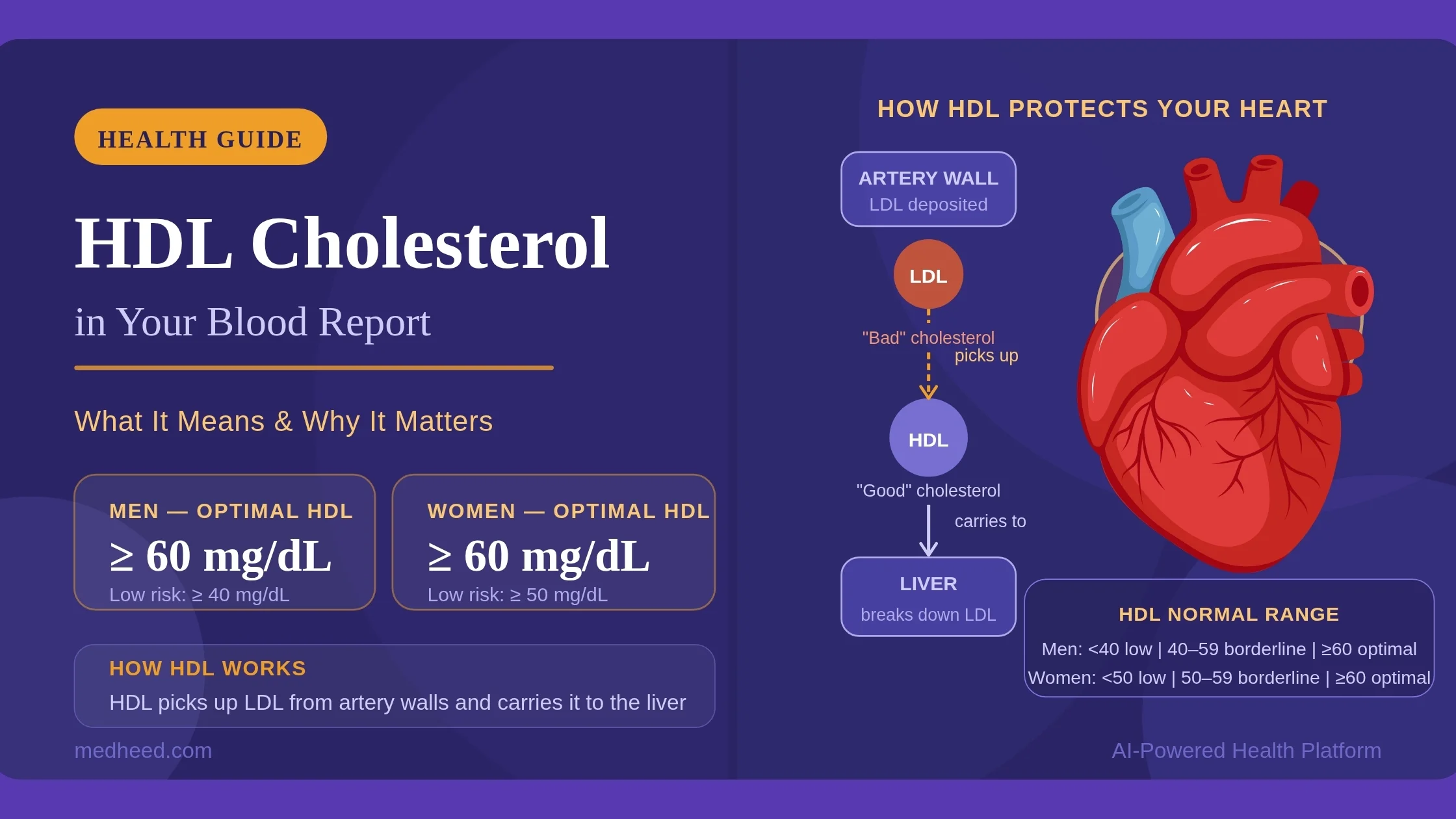
You finally get your blood test report… and there it is — a bunch of numbers, medical terms, and confusion. One term that often stands out is HDL cholesterol.
Is it good? Bad? Normal?
Normal HDL levels:
- Men: 40–80 mg/dL
- Women: 50–80 mg/dL
If you’ve ever asked yourself these questions, you’re not alone. Understanding your HDL cholesterol levels is important because it plays a key role in your heart health and overall well-being.
Let’s break it down in the simplest way possible.
What is HDL Cholesterol?
HDL stands for High-Density Lipoprotein, but don’t worry about the name.
Think of HDL as the “good cholesterol” in your body.
Its main job?
It cleans up excess cholesterol from your blood and takes it back to the liver, where it can be removed from the body.

Why is it called “good” cholesterol?
Because higher HDL levels help:
- Reduce plaque buildup in arteries
- Lower risk of heart disease
- Keep your blood vessels healthy
What your HDL result means?
| Category | Men (mg/dL) | Women (mg/dL) | What it Means |
| Low | < 40 | < 50 | Higher health risk |
| Normal | 40–60 | 50–60 | Acceptable |
| High (Good) | > 60 | > 60 | Protective for heart |
What do these ranges mean?
- Low HDL → Increased risk of heart problems
- Normal HDL → Average protection
- High HDL → Better heart protection
HDL vs LDL
| What to Know | HDL (Good Cholesterol) | LDL (Bad Cholesterol) |
| Effect on your heart | Protects your heart | Can harm your heart |
| If level is high | Good for you | Not good |
| What it does inside body | Keeps arteries clear | Can block arteries over time |
| How to improve | Exercise, healthy food, good habits | Eat clean, stay active, reduce junk food |
| What is it | High-Density Lipoprotein | Low-Density Lipoprotein |
Why HDL is Important for Your Health
HDL is more than just a number — it’s your body’s natural defense system.
1. Supports Heart Health
Higher HDL levels are linked to a lower risk of heart disease.
2. Removes Bad Cholesterol
HDL helps remove LDL (bad cholesterol) from your bloodstream.
3. Long-Term Protection
Maintaining good HDL levels can:
- Prevent artery blockages
- Improve blood circulation
- Reduce risk of stroke
What Happens if HDL is Low?
Low HDL levels can quietly increase your health risks.
Possible Risks:
- Heart disease
- Stroke
- Poor cholesterol balance
Are there symptoms?
Usually no visible symptoms. That’s why blood tests are important — they reveal what your body isn’t showing.
How to Increase HDL Naturally
Good news — you can improve your HDL levels with simple lifestyle changes.
Diet Tips
- Eat healthy fats (nuts, seeds, olive oil)
- Add fatty fish (like salmon)
- Avoid trans fats and processed foods
Lifestyle Changes
- Quit smoking
- Maintain a healthy weight
- Reduce stress
Exercise
- Aim for 30 minutes of activity daily
- Walking, cycling, or yoga all help boost HDL
Why Both HDL and LDL Matter
- They do different jobs: LDL carries cholesterol in the blood, while HDL helps remove extra cholesterol.
- Balance is important: Looking at only one number doesn’t give the full picture.
- High LDL can be risky: It may cause cholesterol to build up in arteries over time.
- Low HDL means less protection: There’s less removal of extra cholesterol from the body.
- Both together matter: Understanding both values helps you know your real heart health risk.
Common Misconceptions About HDL
Myth 1: “Higher HDL is always better”
👉 Extremely high HDL isn’t always beneficial — balance matters.
Myth 2: “Only diet affects HDL”
👉 Exercise and lifestyle play a huge role too.
Myth 3: “If I feel fine, my HDL must be fine”
👉 HDL issues often have no symptoms.
How to Read HDL in Your Blood Report
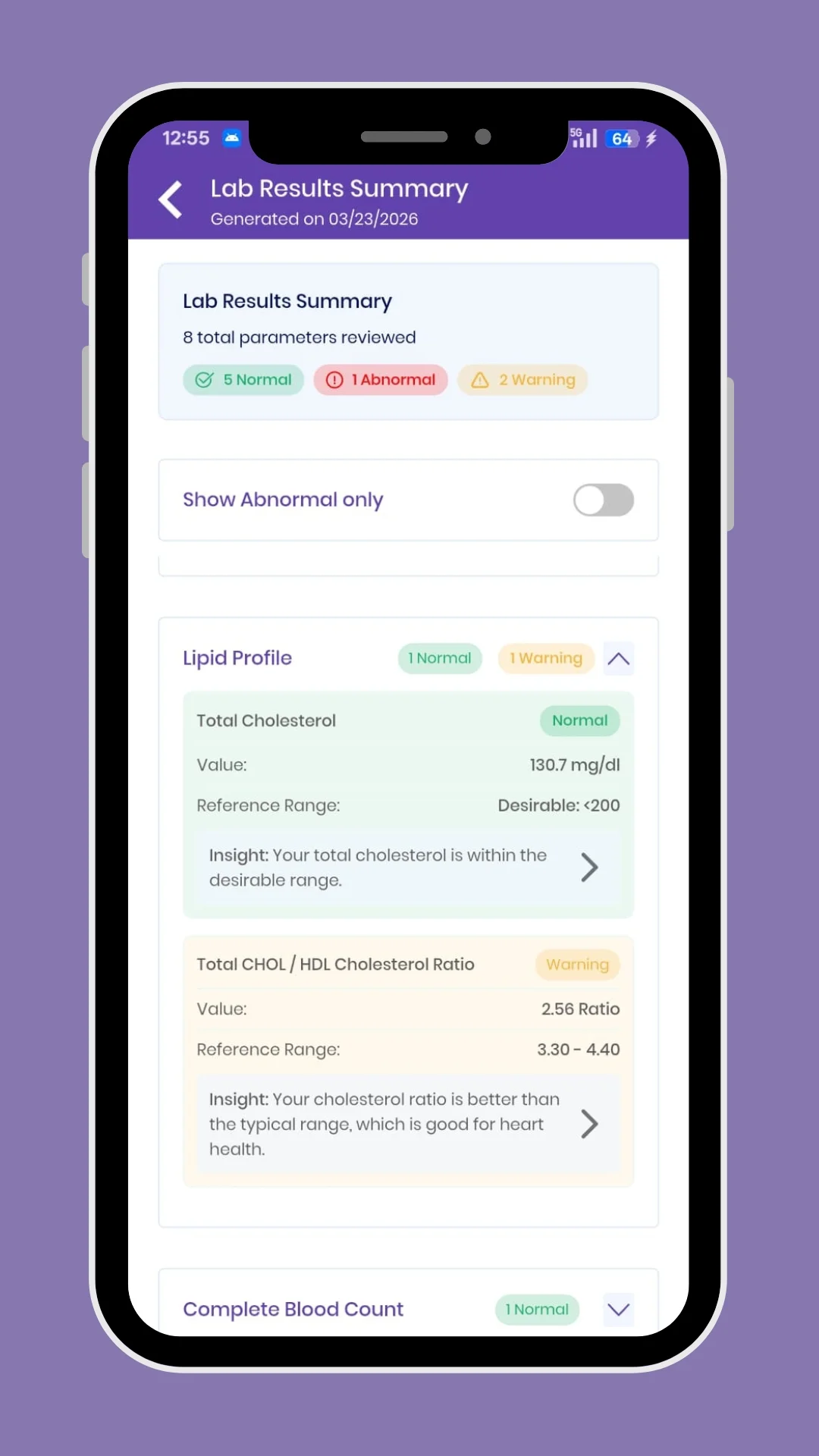
When you look at your report, HDL is usually listed under:
Lipid Profile / Cholesterol Panel
You might see something like: HDL Cholesterol: 45 mg/dL
How to understand it:
- Compare it with the normal range
- Check alongside LDL and triglycerides
- Don’t panic — one number doesn’t tell the full story
Still Confused by Your Blood Report? Here’s an Easier Way
Understanding lab reports shouldn’t feel like decoding a science paper. That’s where Medheed comes in.
Medheed is an AI-powered health platform designed to make your reports simple and easy to understand.
How Medheed helps:
- Breaks down biomarkers like HDL into simple language
- Gives personalized health insights
- Shows your data in an easy-to-read dashboard
Instead of guessing what your HDL means, you get clear answers in seconds.
Conclusion
HDL cholesterol plays a powerful role in keeping your heart healthy.
- It removes bad cholesterol
- Protects your arteries
- Supports long-term health
The key is not just knowing your numbers — but understanding what they mean.
References
- World Health Organization (WHO) – Cholesterol Guidelines
- American Heart Association (AHA) – HDL (Good Cholesterol)
- National Institutes of Health (NIH) – Cholesterol Basics
- Mayo Clinic – HDL Cholesterol: How to Boost Your ‘Good’ Cholesterol
- Centers for Disease Control and Prevention (CDC) – Cholesterol Overview