
A Number on Your Liver Report — That Nobody Explains
Rohan, 33, got his routine blood test back. One number was flagged in red ALT: 78 U/L. His doctor said "your liver enzymes are slightly elevated." No explanation of what that means, why it happened, or what to do next.
Sound familiar?
ALT (Alanine Aminotransferase) also called SGPT in Indian lab reports is one of the most important liver markers in a routine blood panel. When it is flagged, it deserves a clear explanation. Not medical jargon. Not panic. Just clarity.
What Is ALT and Why Does It Matter?
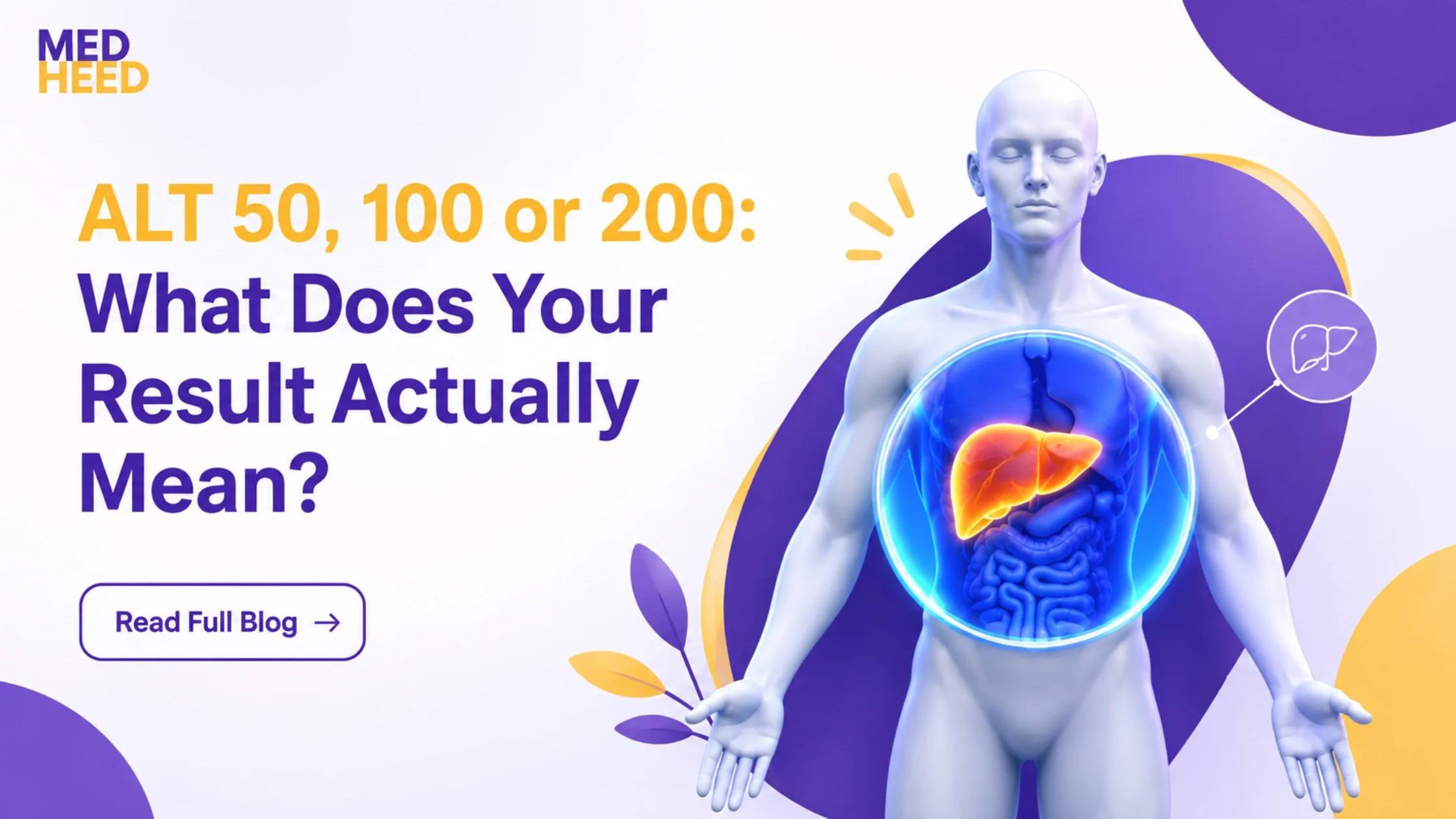
ALT is an enzyme that lives primarily inside liver cells. When liver cells are healthy and intact, ALT stays inside them. When liver cells are damaged or inflamed, ALT leaks into the bloodstream — and your blood test picks it up.
Think of it like this: a high ALT is your liver raising its hand and saying something is wrong.
The higher the ALT, the more liver cell damage is likely occurring.
Normal ALT range:
- Men: 7 – 56 U/L
- Women: 7 – 45 U/L
(Ranges may vary slightly between labs — always check your lab's reference values)

ALT 50, 100, 200 — What Each Level Is Telling You
ALT of 50 U/L — Mildly Elevated
Just above the upper limit of normal. At this level, the liver is signalling mild stress. This is the most common result seen in routine check-ups and is often linked to:
- Fatty liver disease (NAFLD) — the most common cause in India
- Recent alcohol consumption
- High-fat, high-sugar diet over weeks
- Certain medications — paracetamol, statins, antibiotics
- Intense exercise in the 48 hours before the test
A single mildly elevated ALT is rarely alarming — but it should not be ignored. Retest in 4–6 weeks after lifestyle changes. If it persists, investigate further.
ALT of 100 U/L — Moderately Elevated
This is 2–3 times the upper normal limit. At this level, something more meaningful is happening. Common causes include:
- Non-alcoholic fatty liver disease (NAFLD) — progressing to inflammation (NASH)
- Alcohol-related liver damage
- Viral hepatitis B or C — often silent with no symptoms
- Thyroid dysfunction — hypothyroidism can elevate liver enzymes
- Obesity with metabolic syndrome
At 100 U/L, a single test is not enough. You need a full liver panel AST, GGT, ALP, bilirubin — alongside an ultrasound abdomen. Hepatitis B and C screening should also be done at this level.
ALT of 200 U/L — Significantly Elevated
This is 4–5 times the upper normal limit and requires prompt medical attention. ALT this high points to active liver cell injury. Possible causes:
- Acute viral hepatitis A, B, or E — highly common in India
- Drug-induced liver injury — paracetamol overdose is a leading cause
- Autoimmune hepatitis
- Severe alcoholic hepatitis
- Acute biliary obstruction
Important: In acute viral hepatitis, ALT can spike to 1000–3000 U/L or higher a pattern with a very different clinical urgency than a persistent mild elevation.
Real Talk: The Mistake Most People Make
Priya, 38, had an ALT of 92 U/L on her annual check-up. Her doctor said "slightly high, we'll recheck in six months." Six months later it was 118 U/L. A hepatitis B surface antigen test which was never ordered initially came back positive. She had been carrying a silent hepatitis B infection for years.
ALT above 80 U/L on a routine check-up should always prompt a full liver workup — not just a repeat ALT in six months.
What Other Tests Should You Ask For?
ALT alone does not tell the whole story. Ask for:
| Test | What It Adds |
| AST | Damage to liver and other tissues; AST:ALT ratio helps identify alcohol-related injury |
| GGT | Elevated with alcohol use and bile duct issues |
| ALP | Signals bile duct or bone-related problems |
| Bilirubin | Measures liver's ability to process waste |
| Albumin | Indicates liver's synthetic function — drops in chronic disease |
| HBsAg + Anti-HCV | Screens for hepatitis B and C — essential when ALT is above 80 U/L |
| Ultrasound abdomen | Visualises liver size, texture, and fatty changes |
FAQs
Q: Can exercise raise ALT?
Yes — intense exercise, especially weight training, can elevate ALT by 20–30 U/L for 24–72 hours post-workout. Always mention recent exercise to your doctor before interpreting the result.
Q: Can a fatty diet before the test raise ALT?
A single meal won't significantly change ALT — but weeks of high-fat, high-sugar eating can. ALT reflects ongoing liver stress, not just what you ate yesterday.
Q: Is ALT the same as SGPT?
Yes — exactly the same test. Indian labs often use SGPT (Serum Glutamate Pyruvate Transaminase), which is the older name for ALT. Same enzyme, same result.
Q: My ALT is 55 U/L — should I panic?
No. A mildly elevated ALT at 55 U/L warrants attention, not panic. Cut alcohol, reduce refined carbs, exercise regularly, and retest in 4–6 weeks. If it remains elevated, investigate further with your doctor.
Q: Can Ayurvedic or herbal supplements raise ALT?
Yes — this is significantly underreported in India. Certain herbal formulations, including some commonly used supplements, can cause drug-induced liver injury. Always mention all supplements to your doctor when liver enzymes are elevated.
How Medheed Can Help
An ALT of 78 U/L flagged in red is alarming to look at. But without AST, GGT, bilirubin, and clinical context sitting alongside it that number alone tells an incomplete story.
Medheed reads your full liver panel in plain language what each number means, what the pattern between them suggests, and exactly what questions to bring to your doctor. Because understanding your report should not require a medical degree.
The Bottom Line
ALT is your liver speaking. The question is how loudly.
- 50 U/L — mild stress, lifestyle review needed
- 100 U/L — moderate elevation, full workup required
- 200 U/L — significant injury, prompt medical attention
Do not dismiss a flagged ALT as "slightly high." And do not panic either. Understand what level you are at, what likely caused it, and what tests to run next.
Your liver has remarkable capacity to heal but only if you give it the right attention at the right time.
References
- Kwo, P. Y., et al. (2017). ACG clinical guideline: evaluation of abnormal liver chemistries. American Journal of Gastroenterology, 112(1), 18–35.
- Lala, V., et al. (2023). Liver function tests. StatPearls, NCBI Bookshelf. https://www.ncbi.nlm.nih.gov
- Dufour, D. R., et al. (2000). Diagnosis and monitoring of hepatic injury. Clinical Chemistry, 46(12), 2027–2049.
- Patel, N., & Mukherjee, S. (2019). Non-alcoholic fatty liver disease in India. Journal of Clinical and Experimental Hepatology, 9(2), 141–148.
- World Health Organization. (2023). Hepatitis B and C in South-East Asia. https://www.who.int
- Indian Council of Medical Research. (2022). Guidelines for management of non-alcoholic fatty liver disease. https://www.icmr.nic.in